Home
Home
 Categories
 Discover
 My Machmall
UK's Construction Machinery Trade Surplus Narrows Again
The good news is that Brexit does not
appear to impeding the flow of construction machinery into and out of the UK
too much; the bad news is that the UK’s trade surplus is narrowing.
The UK continues to export more
construction equipment (excluding cranes) than it imports but the gap is
narrowing.
After a growth spurt in the fourth quarter,
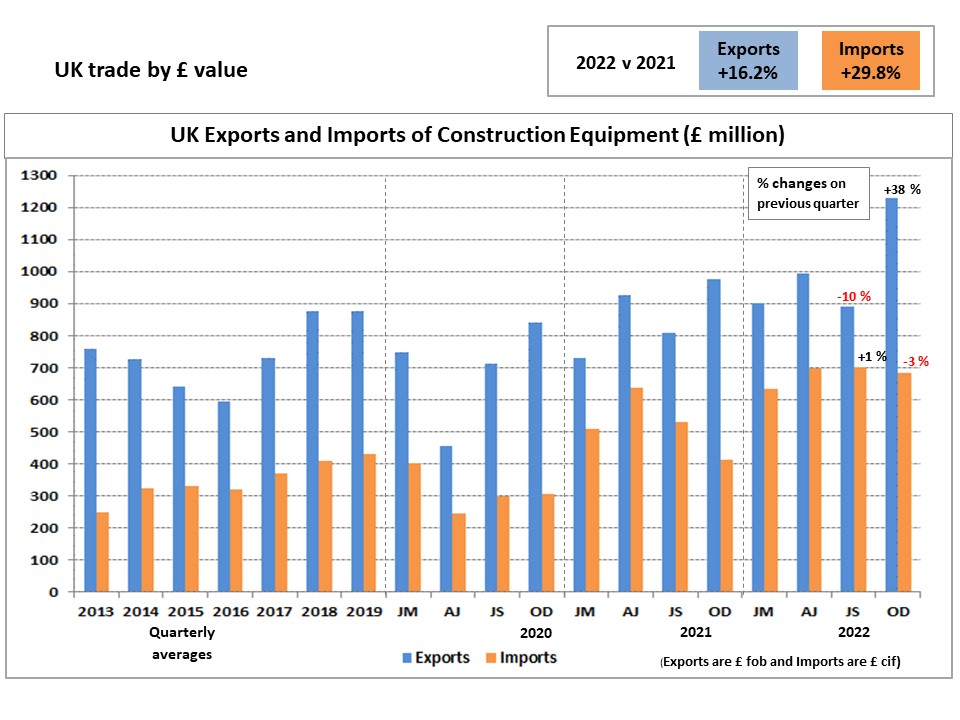
2022 exports of UK construction and earthmoving equipment reached a value of
£4,012m, up 16% on 2021’s £3,442m.
However, the value of imports was up by 30%
in 2022 to £2,715m (2021: £2,092m), giving a £1,297m positive balance of trade
in 2022 (or 47%) compared to £1,350m (64%) in 2021.
In 2020, construction machinery exports
were more than double the imports, by value.
In the fourth quarter of 2022, exports of
construction and earthmoving equipment recorded the highest quarterly level of
trade since at least 2013 (when the Construction Equipment Association’ s
current monitoring service began), in both monetary value and tonnage shipped
terms.
For 2022 overall, imports of equipment were
at the highest levels recorded since 2013.
The value of construction machinery exports
in Q4 was £1,228m, up 38% increase on Q3.
The rise in value of exports and imports
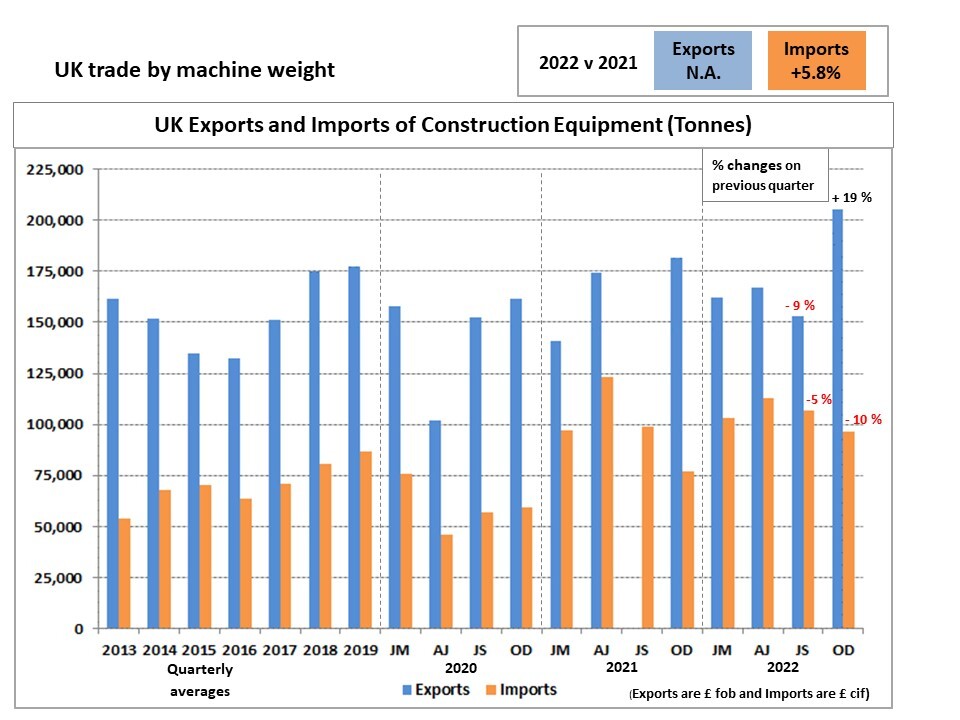
can largely be attributed to rising prices since the weight of imports in Q4
2022 was down 10% on Q3 levels to 97,000 tonnes. Exchanges rates may also have softened the
balance of trade.
However, the tonnage shipped data
illustrates that that the underlying level of export trade was robust last
year. In Q4, exports weighed 205,000 tonnes, an increase of 19% on Q3 levels.
For 2022 in total, exports weight 687,000 tonnes, which was close to the high
levels seen in 2018 and 2019.
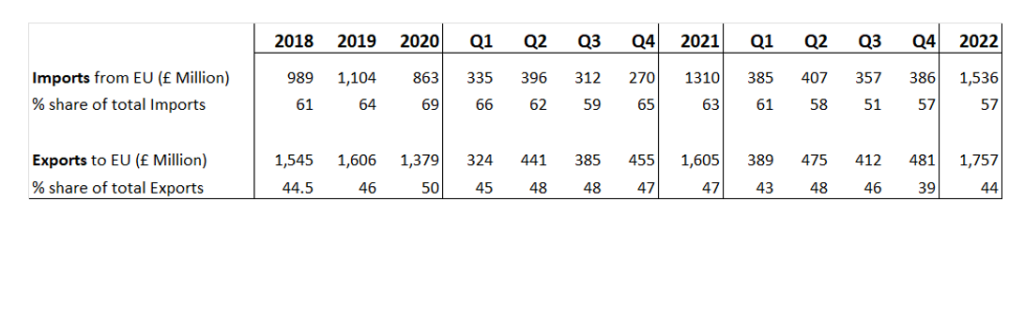
The share of total UK exports to EU markets
fell to 44% in 2022, after peaking at 50% in 2020.
Keyword